SEP EPRO (Salmon Enhancement Program)
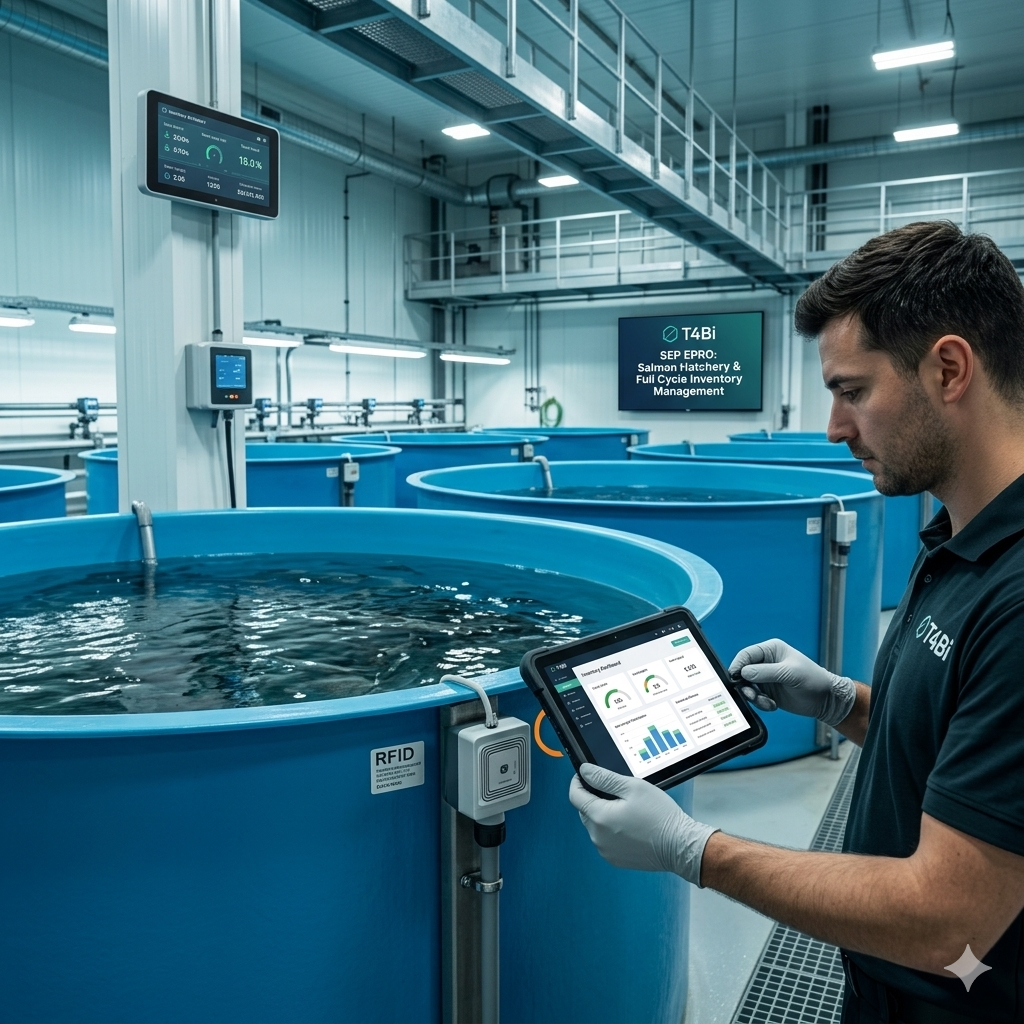
Client Profile
Working with your team has been a rewarding experience, and I truly appreciate your hard work, problem-solving, and professionalism throughout this journey.
The Challenge
Modernize and Transform: Redevelop ENPRO to replace a mission-critical legacy system while aligning with DFO’s Application Rationalization Initiative (ARI). Ensure tight integration with EPAD to enable a unified operational and reporting environment.
High-Complexity Scientific Data Environment: The platform needed to manage and reconcile multiple interdependent data domains, including biological lifecycle and fish health tracking, environmental, habitat, and spawning data, genetic, tagging, and stock grouping data, inventory lifecycle (lots, growth, feed scheduling, release planning), and field survey data (e.g., escapement tracking). This required consistent data models, full traceability, and support for complex transformations across operational workflows.
Remote Operations Constraints: Hatchery operations required reliable system usage in low or intermittent connectivity environments and local usability with controlled synchronization to centralized systems.
Legacy Data Migration: Migrate over 20 years of historical hatchery data into a modern architecture without data loss, corruption, or operational disruption.
Solution Highlights
- Incremental modernization aligned with ARI, avoiding disruptive “big bang” replacement
- Unified data architecture integrating ENPRO and EPAD
- Cloud-first platform with centralized governance and distributed access
- Hybrid processing model (synchronous + asynchronous)
- Resilient data synchronization model designed for remote operations
Core Architectural Innovation
A distributed, synchronization-aware operational platform was implemented to support reliable hatchery operations in disconnected or low-connectivity environments, centralized data consistency and governance, and seamless integration between operational (ENPRO) and analytical (EPAD) systems. This approach enabled continuous field operations while modernizing critical infrastructure without service disruption.
Highlights of the Solution Are
- Complete architectural redesign and redevelopment of ENPRO
- Integrated operational and analytical data ecosystem with EPAD
- Cloud-native infrastructure supporting scale, security, and resilience
- Messaging-based integration for reliable, decoupled system communication
- Containerized deployment ensuring consistency across environments
Advanced Domain Capabilities
- Growth modeling and feed scheduling algorithms
- Inventory lifecycle management (lot creation, splitting, adjustment) with full auditability
- End-to-end traceability across biological and operational processes
- Sophisticated reporting and analytics across hatchery operations and planning
Technologies Used
- C# / .NET Services
- MS SQL Server (RDBMS)
- Sencha ExtJS 7.x
- Azure DevOps, Azure Pipelines, GitHub
- Visual Studio 2022
- Docker
Cloud & Infrastructure
- Microsoft Azure
- Azure Active Directory
- Azure Storage / Blob Storage
- Azure Service Bus
- Secure VPN connectivity
In Legacy
- Oracle 18c
- MS Access
Ready to Modernize?
Modern IT systems aren’t just about compliance — they’re about enabling agility, scalability, and cost efficiency. They’re also about making the right judgment calls: preserving and evolving what makes your business unique, while integrating or
standardizing what is simply a table-stake capability.
Every year, code maintenance costs average 25% of the original build. The opportunity cost of not modernizing is even higher. The real challenge is making architectural decisions that avoid over-engineering or platform lock-in — and ensure systems remain sustainable.